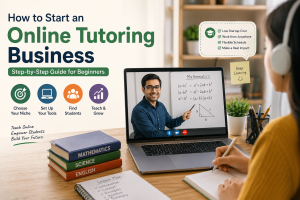
Tutoring is simply helping someone understand a subject you already know well. It’s one of the easiest ways to turn knowledge into income. In the past, tutors met students at home or in small study groups. Now it happens online too. You can teach from your room and still reach someone miles away. The idea is the same – sharing knowledge in a way that makes learning easier. In this guide, you’ll learn how to become a tutor online and build your own tutoring business.
When you build your own tutoring website, you’re creating a small online home for that skill – a place where students can learn about you, book lessons, and pay directly.
Anyone with skill and patience can become a tutor. You don’t need to be a professor. If you can explain things clearly and enjoy helping others, tutoring can turn that skill into both impact and income.
What Tutoring Really Means Today?
Tutoring today isn’t just about explaining topics anymore. It’s a mix of teaching, planning, and light business work. A good tutor doesn’t stop at showing how things work.
Most tutors now use online tools – video calls, shared notes, and even virtual whiteboards. That setup lets them teach students nearby or halfway across the world. What matters is the structure: simple lessons, clear results, and friendly communication.
Why Tutoring Is Growing So Quickly?
There’s been a huge shift in how people learn. Because of the internet, anyone can study from anywhere, and that’s driving tutoring demand up. Parents look for one-on-one help for school exams. Adults often want to learn a language or upgrade job skills. Zoom or Google Meet made it simple to teach online.
Who Can Become a Tutor
Tutoring is open to almost anyone who enjoys explaining things clearly. You don’t have to be a teacher by title – you just need strong knowledge and patience.
Some examples:
- A university student helping with math or physics.
- An English teacher offering grammar and conversation practice.
- A software engineer teaching coding basics.
The Step-by-Step Path How to Become a Tutor
Every great tutor starts small. The process usually follows three main steps: learn deeply about your subject, organize your setup, find students, and keep improving as you go.
Step 1: Prepare Your Foundation
Start with one subject you enjoy and understand deeply. Choose the level of students whom you’re comfortable teaching. It may be middle school, test prep, or adult learners. Then choose your subject and make a plan for how uniquely you deliver it to your students. Before starting to teach students, make your foundation clear and build a strong strategy.
For the first few days – give some free or discounted lessons to build confidence and gather feedback. Also, make two or three ready-made lesson plans. This will help you to build your credibility.
Step 2: Set Up Your Tutoring Strategy
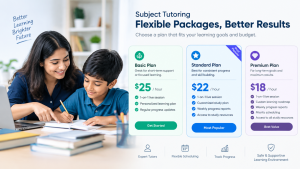
Treat your tutoring like a service business, even if it’s small. Decide how you want to charge – per hour, by package, or by course.
Example:
- $25 per hour for individual sessions
- $220 for a 10-lesson package
- $120 for a short four-week program
Write a student-friendly short bio about yourself and your subject and teaching strategy. Add a clear picture of yourself. A quick one-minute video introduction is also a better option for introducing yourself to your students. That little personal touch makes students more likely to book.
Step 3: Start Attracting Students
Now it’s time to get noticed. If you want to introduce yourself as a teacher, first gain credibility. Post short learning tips about your subject on different social media. Explain your unique and strategic study plan to students. Give some free video lessons so that students are more attracted to your paid course.
You have to give enough time and steady effort. Then you’ll have enough students to fill your schedule and a strong reason to move forward.
Traditional vs. Online Tutoring
Traditional or In-person tutoring and online teaching feel very different. One keeps you limited to local students, the other opens doors everywhere. start an online tutoring business, you just need a laptop and internet – no travel, no time clash. Choose what fits your subject and your comfort.
Traditional Tutoring: Local but Limited
Working in person feels real and connected. You can read your student’s expressions, adjust on the spot, and use simple tools – a notebook, a whiteboard, maybe a printed worksheet.
This method works well for hands-on subjects and young children. Scheduling is manual: phone calls, SMS, or in-person bookings. Expect fewer daily teaching hours because of travel and prep. This reduces your available time. And most students choose an online tutor for their private tutoring. This is just because of the flexibility for both students and teachers.
Online Tutoring: Global and Scalable
If you teach online, you can reach students from anywhere. You don’t need much- just a good internet line and some simple tools. Most tutors use Zoom or Google Meet to take classes. After the class, you can share recordings through Google Drive or Dropbox. For booking, Calendly works well, so students can pick their time. Payments are easy too-you can use Stripe or PayPal to get paid without trouble. You can teach 6–12 sessions per weekday without geographic limits and package recorded lessons as sellable courses.
Why the Shift Matters
Students now expect recorded lessons, flexible hours, and searchable tutor profiles.
Parents and adult learners check reviews and sample lessons online before contacting a tutor. Verified profiles on Google Business or a personal website increase trust.
If you want to teach online, you have two options. 1st, join someone else’s platform as a tutor or create your own website. Building your own website means establishing a complete teaching brand. This gives you better visibility and control. If you want your own website, Marketish can create it for you – including logo design, social media accounts, SEO, and all essential services. So far, Marketish has successfully built over 60 tutoring websites.
Why Every Tutor Needs a Website
A website centralizes your services, automates admin, and turns casual visitors into booked students. It is the single most important asset for scaling a tutoring business.
A Website Is Your Digital Classroom
A website presents your subjects, pricing, reviews, and a booking flow that runs 24/7.
Include a clear services page, a booking widget, and a short demo video. Display three recent testimonials and two sample lesson outlines. Provide one-click payment links and a downloadable one-page syllabus to increase conversions.
Core Benefits of a Tutoring Website
Below is a compact table showing core website benefits and direct impacts.
| Benefit | Direct Impact |
| Visibility | Ranks for keywords like “English tutor online” and local queries |
| Automation | Booking widget, email reminders, and payment capture |
| Branding | Professional logo, consistent colors, and a short intro video |
| Trust | Testimonials, verified reviews, and sample lesson materials |
Choose Your Niche & Audience
Choosing a subjects narrows your offer and makes marketing precise. Target one subject, one level, and one student type first.
Picking a Profitable Subject
Pick one subject you teach well and that has clear student demand.
Checklist to pick a subject:
- List the top three skills you can teach.
- Search for those keywords with location modifiers.
- Count active tutors on two marketplaces.
- Choose the subject with the best balance of demand and your expertise.
Validate Student Demand
Validate demand with quick tests: keyword checks, marketplace scans, and five discovery calls.
Run one keyword search for “[subject] tutor [city]” and note search results. Browse Preply or mytutor.co.uk for active ads and price ranges. Offer five short paid trials at a discounted rate; track conversion rate to full packages.
Mini test table:
| Test | Action | Success signal |
| Keyword | Google search volume & SERP | Top 10 results include tutors |
| Marketplace | Count active tutor listings | ≥10 local/online listings |
| Trials | Run 5 paid trials | ≥2 convert to packages |
Create Your Tutor Brand & Website
A clear brand and a focused site speed conversions. Aim for trust, simple booking, and visible proof of results.
Must-Have Pages
Build six pages: Home, About, Services, Pricing, Book a Lesson, Contact.
Home must feature one clear CTA. About shows credentials and a 60-second intro. Services list lesson types and durations. Pricing shows hourly and packages. Book a Lesson embeds a scheduler. Contact gives email and phone options. if you are thinking to build a Professional tutoring website with Marketish Limited to showcase your services, attract students, simplify bookings, and create a strong online presence.
Branding Checklist
Use a logo, professional photo, three brand colors, and a short intro video.
Select fonts and colors that read well on mobile. Add two trust elements: three student testimonials and one sample lesson PDF. Keep voice second-person and benefits-focused. Prepare a 1-page brand brief for designers.
Brand elements list:
- Logo (SVG)
- Photo (600×600 px)
- Palette (primary, accent, neutral)
- 60-second intro video (MP4)
- Three testimonials (name, outcome, score)
SEO Basics for Tutors
Add meta title/description, FAQ schema, local keywords, and fast page speed.
Write unique meta titles under 60 characters. Keep descriptions under 155 characters and include target keyword plus city. Add 5 FAQ Q/A and mark with schema.org/FAQ.
Quick SEO checklist:
- Meta title: “[Subject] tutor in [City] — Book a trial”
- Meta description: 120–150 chars with CTA
- FAQ schema: 3–5 questions (snippet-ready)
- Local signals: Google Business Profile, NAP on footer
Performance: compress images, use caching, serve via HTTPS
If you’re unsure how Local SEO can help grow your tutoring business, contact Marketish for professional Local SEO services that help your website and Google Business Profile reach more students searching for tutors in your local area.
Set Up Services & Pricing
Set clear service types, session lengths, payment methods, and package rules. Use prices and terms that match your local market and niche.
Simple Pricing Framework
Pricing table (example):
| Model | Unit | Example Price |
| Hourly | 45 min | $25 |
| Package | 10×45 min | $220 |
| Course | Self-paced | $99 |
Show trial discounts and payment plans. Accept Stripe, PayPal, or local bank transfer. Add invoices via Wave or QuickBooks for record-keeping.
Trial Lessons That Convert
Offer a 20–30 minute paid trial or a 50% discounted first full lesson to demonstrate value.
Limit trials to one per student. Use a short needs assessment before the session. After the trial, send a two-line summary, next-step recommendation, and a clear CTA to buy a package on your booking page.
5-Part Lesson Structure
Warm-up, objective, teach, guided practice, and feedback.
Warm-up (5 minutes) reviews prior work. State a single measurable objective. Teach with examples and model solutions. Give 10–20 minutes of guided practice. End with actionable feedback and one homework task.
Get Your First 50 Students
Start with low-cost channels, repeatable outreach, and a simple conversion funnel that moves prospects from trial to package.
Free Organic Methods
Use content, referrals, and local groups to attract initial students with minimal spend.
Write four pillar blog posts answering common problems (example: “How to improve algebra test scores in 4 weeks”). Post two study-tip videos per week on Facebook and Instagram. Ask each satisfied student for one referral; five referrals from ten early clients can add 15–25 new trial signups.
Social Media Growth
Post consistent short lessons and success clips to build trust and inbound leads.
Publish 60–90 second clips showing a common mistake and a clear fix. Use captions with keywords like “math tutor online” or “IELTS speaking tips.” Pin one testimonial per week. Track followers, weekly engagements, and the three highest-performing posts to repeat formats.
Scale & Grow Your Tutoring Business
Scale through delegation, productization, and recurring offers that increase revenue without linear time input. Hire help when utilization exceeds 60–70% and the demand backlog grows past two weeks.
Track booked hours versus available hours. If weekly booked hours > 24 and waitlist forms, recruit part-time tutors or run group classes to free capacity.
FAQ
Do I need a degree to become a tutor?
No- subject mastery and proven results matter more than formal degrees.
Show samples of student work, before/after scores, or short video demonstrations to prove competence.
How can I promote my tutoring website?
Use SEO blog posts, local Google Business listing, and short social videos.
Optimize pages for “tutor + city” keywords, add FAQ schema, and publish one new blog post every two weeks.
How much can new tutors earn?
Beginners typically earn $20–$35 per hour; specialists charge $40–$100+.
Set entry rates, track uptake, then increase by 10–20% after 10 positive reviews or measurable student gains.
Conclusion
Teaching isn’t just a job. It’s something that leaves a mark on others. Tutoring gives you that chance – to help, to guide, and to grow with your students.
You can help students with knowledge and a bit of patience. Start small, learn as you go, and keep improving the way you teach. Every lesson you give builds someone’s confidence and boosts your own confidence also.
In the end, being a tutor isn’t about titles or platforms. It’s about people learning from people — the simplest form of education, now open to anyone who’s ready to share what they know.