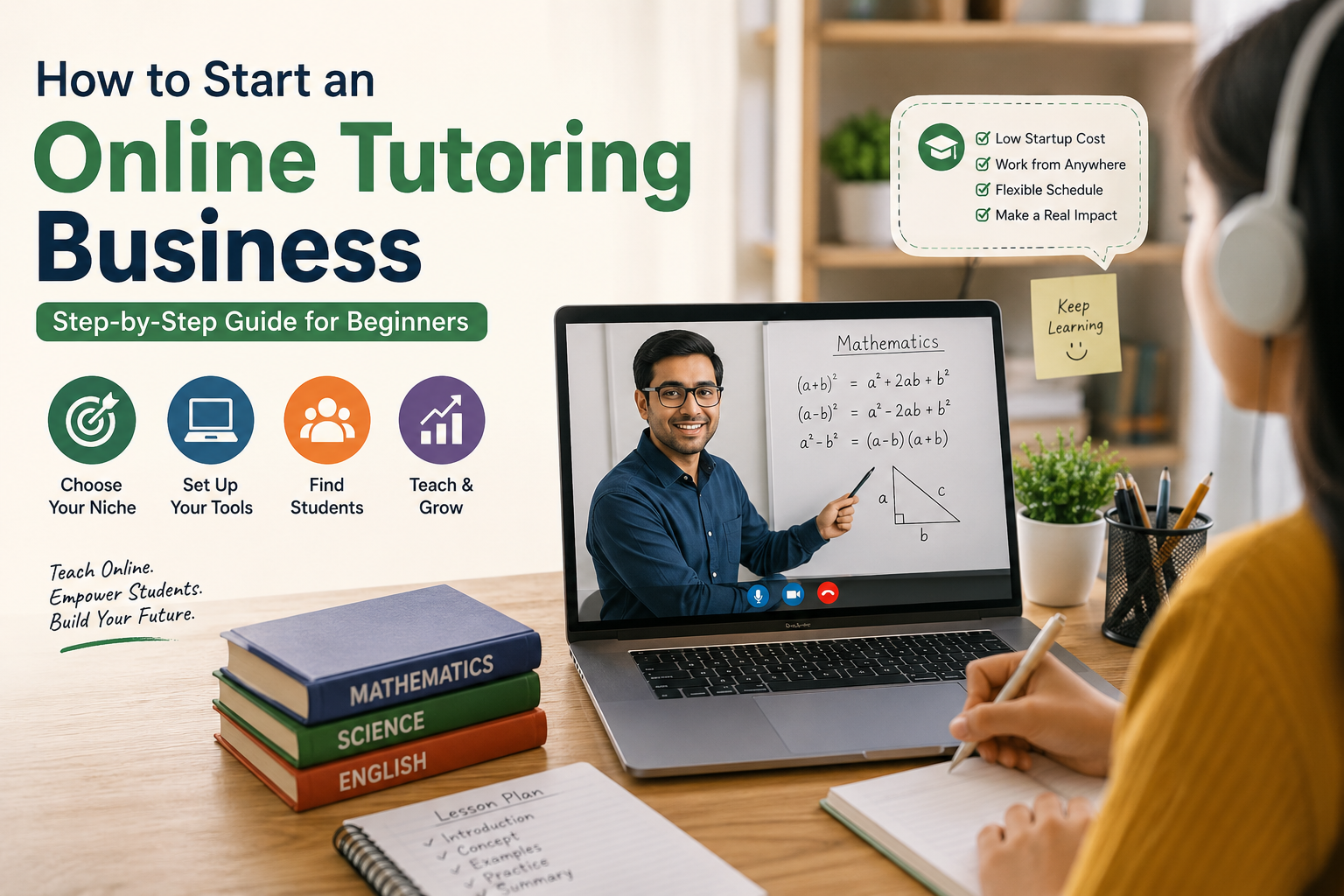
An online tutoring business means you teach students online and earn money from it. You can teach students through live classes and manage everything online. But, starting an online tutoring business often feels more complicated than it really is. You will get confused with lots of tools, platforms, pricing advice, and mixed opinions.
However, if you are good at teaching but don’t understand the tutoring business online, you are in the right place. In this guide, we will discuss how to turn skills into a proper online tutoring business.
We will also show you how the online tutoring business works and how you can build it step by step in a clear and practical way.
What Is an Online Tutoring Business?
An online tutoring business is a setup where a tutor teaches students through the internet using live video sessions, digital study materials, and online payment systems instead of physical classrooms.
Online tutoring is common in today’s times. A tutor opens a video call, and the student joins from another place. Most sessions stay one-to-one, because students want personal attention. Some tutors also teach small groups. Since travel is removed, time stays flexible, and cost stays lower. This is why online tutoring keeps growing across different subjects and age groups.
How online tutoring is different from offline tutoring
The difference becomes clear when daily practice is compared.
| Area | Online Tutoring | Offline Tutoring |
| Place | Tutor and student stay remote | Both meet physically |
| Tools used | Zoom, Google Meet, shared screens | Books, notebooks |
| Cost | Low setup and no travel | Add Travel and space cost |
| Student reach | Multiple cities or countries | Local area only |
| Time control | Flexible session timing | Fixed schedules |
Who Should Start an Online Tutoring Business?
Anyone who understands a subject well, can explain it clearly, and has stable internet access can start an online tutoring business.
You can start teaching if you understand any subject well. Your profession doesn’t matter for it. You can be an online tutor as you are a student, a school teacher, or even a professional. Just explain the thing clearly to the student and keep growing your knowledge. That’s the basic of starting an online tutoring business.
Can beginners start tutoring online?
Yes, beginners can start, and many already do. Students often need help with basics, not advanced theory. Clear explanations matter more than certificates. When you show up on time, explain calmly, and follow a simple structure, trust grows. That trust brings repeat sessions and referrals, which is how most tutors build a steady income.
How to Start an Online Tutoring Business Step-by-Step?
Start your online tutoring business by choosing a clear tutoring niche and setting a simple base with basic tools.
You need to follow a proper setup for an online tutoring business. When you follow every setup step by step, your tutoring business will grow easily. So, let’s follow all the steps and grow your business.
Step 1: Decide Who You Want to Tutor and What You’ll Teach
Choose a clear tutoring niche because it determines every part of your online tutoring business. When you know exactly who you teach and what you teach, students trust you faster. That trust helps you get clients sooner.
For beginners, a short goal works better than trying to teach everyone. A math tutor for school students feels clearer than a tutor who teaches everything. Also, parents and students understand your value faster when your message stays simple.
In fact, a clear niche helps in three ways:
- Trust increases because students know what you offer
- Faster clients come because your service matches real needs
- Easier pricing happens because similar students expect similar rates
So, select one subject and one student type. That decision removes confusion and saves time later.
High-demand online tutoring niches
Some tutoring areas show steady demand. These are,
- Academic subjects like math, science, and English
- Exam preparation for school tests and competitive exams
- Skill-based tutoring, such as coding, spreadsheets, or design basics.
- Teaching language like spoken English or any foreign language
Step 2: Check If You’re Ready
Readiness does not mean perfection. It means having the basics to start teaching without stress. Because most students need clarity, not complex methods.
Three core skills matter for a tutor at the beginning-
- Subject knowledge at a practical level
- Communication that stays calm and simple
- Basic tech comfort to manage video calls
Also, you do not need advanced tools to begin. Simple equipment supports clear teaching.
Minimum equipment required
You will need some must-have equipment to start online tutoring.
- Laptop or desktop computer
- Stable internet connection
- Headset for clear audio
- Camera for face-to-face interaction
Can you start tutoring without experience or a degree?
Yes -you can start online tutoring without formal experience or a degree. Many students look for consistent guidance, not titles. When explanations stay clear, sessions stay organized, and confidence grows on both sides. This step removes fear and helps you focus on progress.
Step 3: Pick the Right Platform for a Tutoring Website
First, choose a platform that you can use without confusion. If you don’t understand tech stuff, don’t touch complicated systems. A simple website builder like WordPress is more than enough to start.
Your website only needs basic things at first. Students should see what you teach and how to contact you. That’s all. You can always add more features later when your tutoring starts growing.
Step 4: Choose the Right Tools for Tutoring
The right tools keep your online tutoring business simple and stable from day one. When your tools are easy to manage, you can focus on teaching instead of fixing problems. That’s why most tutors start with basic software and upgrade only after students increases.
However, live teaching needs reliable video conferencing tools. These tools support screen sharing, clear audio, and face-to-face interaction. Three platforms dominate online tutoring because they stay stable even with low setup costs.
| Tool | Best use | Key strength |
| Zoom | One-to-one and group tutoring | Stable video and screen sharing |
| Google Meet | Quick sessions with students | Easy access through a browser |
| Microsoft Teams | Structured lessons and files | Built-in chat and file sharing |
Also, scheduling and payment tools keep sessions organized. Without them, confusion grows fast. Calendly helps students pick time slots without messages. PayPal and Stripe handle payments securely and support international students. Together, these tools reduce missed sessions and payment delays.
Step 5: Set Your Tutoring Prices in the Smart Way
Pricing works best when it stays simple and clear. Most new tutors start with hourly rates because students understand them easily.
However, Hourly pricing gives flexibility, and monthly pricing gives stability. Each option suits a different student type. But charging too low can decrease your business growth. Also, copying rates from experienced tutors without context leads to frustration. That’s why a steady price with clear value builds confidence for both you and the student.
Step 6: Handle Basic Legal, Payments, and Rules
Basic rules protect your time and income. Clear payment timing avoids awkward conversations. Also, Simple cancellation rules reduce last-minute losses. Many tutors accept payment before sessions to maintain consistency. So, shared written rules through message or email to prevent misunderstanding and save time later.
Step 7: Get Your First Online Tutoring Students
Students come faster when you stay visible and specific. Free methods work well at the beginning because trust matters more than ads. Social media helps when you share clear solutions related to your subject. Show you know ledge through a social media post. Also, connect with community groups and answer the questions of parents and students related to your niche.
This free method increases your visibility online and also creates trust. You can also deliver a free demo session on your website. This attracts the student much.
Step 8: Deliver Great Online Tutoring Sessions
Strong lesson delivery keeps your online tutoring business stable and trusted. When sessions stay clear and organized, students return without reminders. A good session does not depend on fancy tools. It depends on structure and focus.
However, an effective online lesson follows a simple pattern. You can start with a quick recap to set context. After that, explain one core concept clearly. And a short summary at the end helps the idea stay fresh.
Student engagement improves when sessions stay interactive. You can ask simple questions to keep attention active. Also, use screen sharing to explain problems step by step. You can provide advanced things like digital notes to students to review later. These small actions improve understanding and reduce confusion. Add progress tracking to your website to build trust over time. Because when results feel visible, referrals follow naturally.
Step 9: Scale Your Online Tutoring Business
Your online tutoring business will grow after consistent effort. When you get more students, you can adjust your price. Because small increases work better than sudden jumps. Students accept higher rates when quality stays stable.
You can hire other tutors when demand exceeds your time. Over time, this approach turns solo tutoring into a structured service.
How SEO and content help long-term growth
Search visibility increases when you share helpful content related to your tutoring niche. Publish simple articles to answer student questions. Over time, organic traffic reduces dependency on platforms and improves control.
Common Mistakes to Avoid in Online Tutoring
There are some common mistakes in online tutoring that slow your growth. So, clear awareness helps you avoid them early. Most problems appear during pricing, platform choice, or time management.
Pricing mistakes
Very low pricing creates pressure instead of loyalty. Also, frequent price changes confuse students. So, set a clear rate with a steady value. This works better long term.
Platform dependency risks
Relying only on tutoring platforms limits control. Because policy changes affect income suddenly. So, run your own platform or website to get direct students and balance this risk.
Burnout and time management
Long hours without breaks can reduce your teaching quality. So, fixed schedules protect energy. When you provide balanced work, this keeps tutoring sustainable.
FAQs
Is online tutoring still growing?
Yes, demand continues to grow due to remote learning habits and increased focus on personalized education.
How much money do I need to start online tutoring?
Very little. You need a phone or laptop, internet, and something to take classes on. That’s it. You don’t need a website or paid tools on day one. Start first. Spend later.
Can I do online tutoring along with studying or a job?
Yes. Most people do that. You choose your own time. Even one or two classes a day is fine. There’s no pressure unless you create it yourself.
Conclusion
An online math tutoring business is a great choice for people who enjoy teaching and want a flexible income. You can grow your tutoring business by improving your teaching quality and increasing your visibility online.
So, follow every step and grow your business. You just need one skill and the courage to start. After that, things move naturally. Don’t wait for perfection. Just begin.